The Local Colour Trap: When Setting Does All the Work
Local film settings feel rooted when characters make revealing choices and ordinary details carry meaning, not when landmarks simply fill the frame.
A drone shot of the county courthouse can make a film look local before anyone speaks. It can also leave the story feeling borrowed: the building is recognizable, but the people could be anywhere. Local storytelling gains its roots from what characters do in a place, and from the everyday details that shape those choices.
Local film settings need more than a landmark
Landmarks are useful shorthand. A water tower, ferry terminal, grain elevator, or familiar stretch of main street can orient viewers quickly, especially in a short film. But recognition is not the same as meaning. A location earns its place in a story when it affects what someone can do, wants to hide, or risks losing.
Ask what changes if the scene moves somewhere else. If a breakup beside the town sign plays exactly as it would beside an anonymous wall, the sign is decoration. If the characters keep interrupting themselves because a parade route blocks the street, or one must leave before the last ferry, the setting has begun to press on the scene.
This does not mean every local film needs a dramatic crisis tied to geography. A place can matter quietly: a shop closes early, a shared driveway makes privacy difficult, or a muddy path limits who can reach a gathering. The point is not to make the setting louder. It is to let it influence the action.
Character choices make a place specific
Rootedness often appears in small decisions: which door a character uses, whom they ask for help, what they refuse to say in front of a neighbor. Those choices reveal a social map more clearly than a run of scenic cutaways. They also give performers something playable, rather than asking them to stand in a picturesque frame and announce where they are.
Consider the difference between “she misses her hometown” and “she takes the longer route home to avoid passing the bakery where her brother works.” The second detail contains a relationship, a habit, and a choice. It does not require a speech explaining the town’s character.
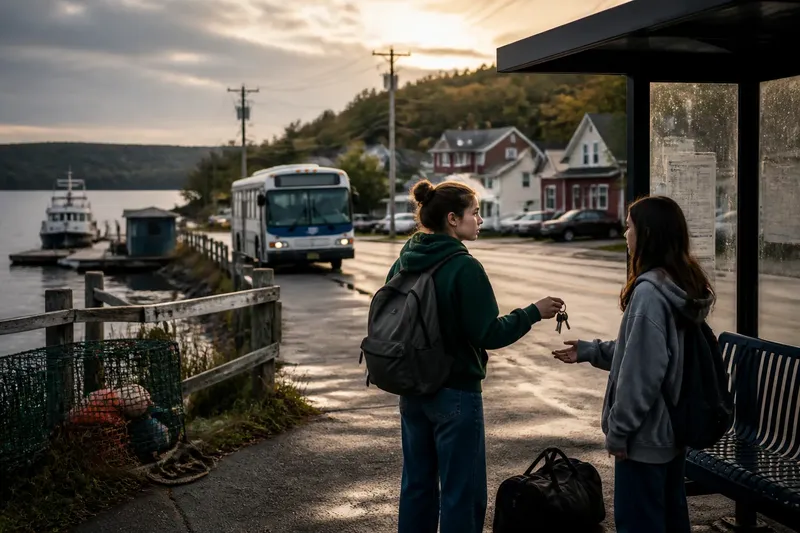
Imagine a fictional short about a teenager who wants to leave a lakeside community. At the bus stop, she tells her friend she has already packed, then gives the friend her spare key because the friend’s family is locked out. That practical act complicates the declaration: leaving is not simply escape, and staying has people attached to it. The lake may appear in the background, but the key carries the scene’s local feeling.
Everyday details do more than scenic views
Details become vivid when they belong to the character’s routine, not merely the location scout’s eye. A cracked plastic bin outside a fish counter, a hand-lettered notice on a laundromat door, or the particular pause before a crossing signal changes can make a setting feel inhabited. Choose details that someone in the story would notice, handle, avoid, or rely on.
Sound can do this work without adding visual explanation. A delivery truck backing up behind a conversation, a screen door that never quite latches, or announcements echoing through a community rink can place a scene in a lived environment. Record the sounds that are actually present during permitted location work, then decide which help the scene and which merely clutter it.
Specificity is not a contest to fit the most local references into a frame. A character who names three businesses, a sports team, and a regional food in one exchange may sound like a brochure. One ordinary reference, used naturally because it matters to the speaker, usually carries more weight.
Local colour should belong to someone
Before adding a recognizable detail, ask who in the story knows it and why. A mural might matter to a longtime resident who remembers painting over a neighbor’s name. A visitor may see only a bright wall. That difference can create a point of view without turning the resident into a tour guide.
It also helps to distinguish affection from display. Local films can show beauty, but they need not make every resident charming, wise, or picturesque. A character can be impatient at the farmers’ market, proud of a plain apartment, or indifferent to the view everyone else photographs. Such contradictions keep a place from becoming a postcard.
For filmmakers working in a community they do not know well, listen before borrowing its details. Ask people how they describe the place in ordinary conversation, and notice which routines they take for granted. Do not treat one person’s account as the whole community; use it as a prompt to ask better questions and make more careful choices.
What should a location detail do?
How do I make a landmark matter to the story?
Connect it to an action, relationship, or obstacle. A character might avoid a memorial plaza because someone they wronged volunteers there, or use the plaza as a meeting point because it is easy to find. If the landmark changes nothing in the scene, let it remain outside the frame.
How many local references should a script include?
Use only the references that help readers understand character or action. A local name can establish familiarity, but a cluster of names may make the dialogue feel like an invitation to prove insider status. If a viewer needs a map to follow the emotional stakes, simplify the references.
What if viewers do not recognize the place?
They can still understand a character’s relationship to it. Show the person’s routine, attachment, irritation, or compromise, and let the place’s meaning emerge through behavior. Recognition can add pleasure for local viewers, but it should not be a requirement for following the story.
When is a scenic shot still useful?
Use one when it gives the audience a breath, clarifies where the next action will happen, or establishes a contrast the story will use. A view can carry emotional force after the film has taught us what the character sees in it. Without that context, it is often just a pretty pause.
Keep the location work focused
During a location visit, note what a character could touch, overhear, or be prevented from doing. Look at entrances, waiting areas, public notices, and the paths people actually take. These observations often suggest stronger scenes than collecting a folder of attractive establishing shots.
Not every detail deserves a close-up, and it is not worth the effort to force regional slang into every exchange or chase a landmark solely for audience recognition. Let a few details recur because the story gives them a reason to return. A familiar object can gather meaning as a character’s circumstances change.
Local film settings feel most convincing when the place is neither wallpaper nor a character in disguise. A street, shop, shoreline, or bus shelter can shape a scene without explaining itself. When deciding whether a detail belongs, look first at what someone chooses to do beside it; that choice is often the clearest local image the film can offer.